Table of Contents
Tranexamic Acid in Skincare: Benefits, Safety & Who Should Use It
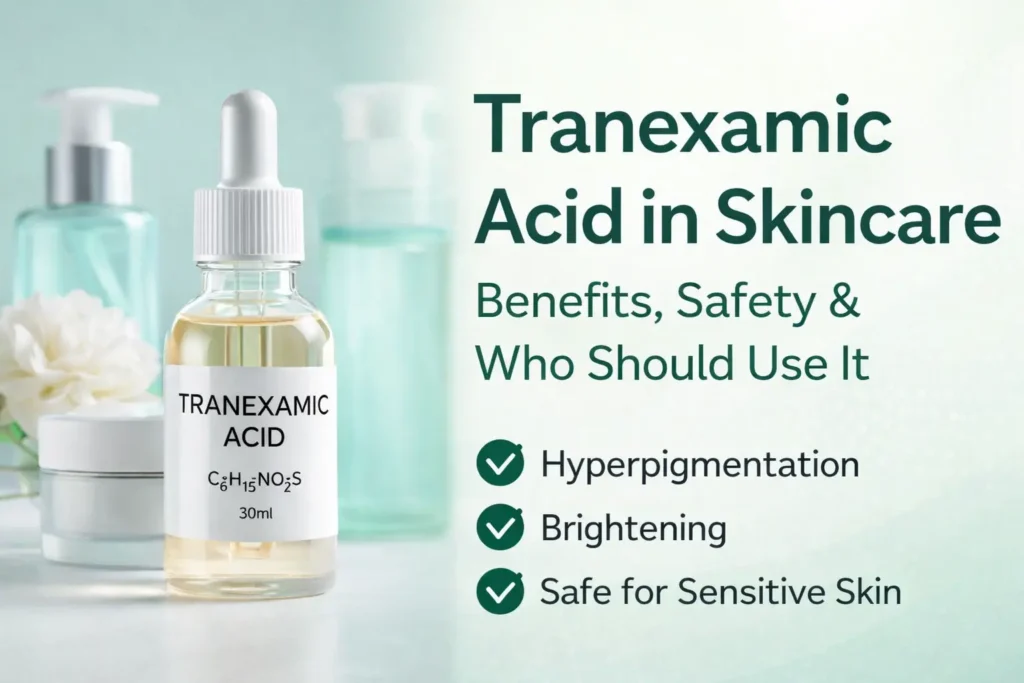
Tranexamic Acid (TXA) has rapidly become one of the most talked‑about ingredients in modern skincare, especially for concerns like melasma, hyperpigmentation, and uneven skin tone. Originally used in medicine to control bleeding, tranexamic acid has found a powerful and well‑researched place in dermatology and cosmetic science.
This article explains what tranexamic acid is, how it works on skin, who should use it, how safe it is, and how to incorporate it correctly—based on scientific evidence and clinical practice.
What Is Tranexamic Acid?
Tranexamic acid is a synthetic derivative of the amino acid lysine. In medicine, it has been used for decades to reduce excessive bleeding by inhibiting plasminogen activation. In skincare and dermatology, this same mechanism helps reduce inflammation‑induced pigmentation pathways.

Unlike harsh skin‑lightening agents, tranexamic acid does not bleach the skin. Instead, it works by interrupting the biological signals that trigger excess melanin production.
How Tranexamic Acid Works on Skin (Tranexamic Acid in Skincare Explained Simply)
Hyperpigmentation—especially melasma—is not just a melanocyte problem; it is also driven by inflammation, UV exposure, and vascular factors.
Tranexamic acid works by:
- Inhibiting the plasmin–plasminogen system, which reduces inflammatory mediators
- Blocking interaction between keratinocytes and melanocytes
- Reducing UV‑induced melanin stimulation
- Helping normalize abnormal blood vessel activity seen in melasma
Because of this multi‑pathway action, TXA is especially effective for stubborn pigmentation that does not respond well to vitamin C or niacinamide alone.
Proven Benefits of Tranexamic Acid in Skincare
1. Melasma Treatment
Tranexamic acid is one of the most evidence‑backed ingredients for melasma, both in topical and oral forms (oral only under medical supervision).
Clinical studies show visible improvement in melasma severity within 8–12 weeks when used consistently.
2. Post‑Inflammatory Hyperpigmentation (PIH)
For pigmentation left after acne, burns, or cosmetic procedures, TXA helps reduce discoloration without irritating compromised skin.
3. Uneven Skin Tone
TXA improves overall skin clarity by reducing localized pigment overproduction, leading to a more even complexion.
4. Anti‑Inflammatory Support
Because it calms inflammatory pathways, tranexamic acid is suitable for sensitive and reactive skin types.
Tranexamic Acid vs Other Brightening Ingredients
| Ingredient | Best For | Key Difference |
|---|---|---|
| Tranexamic Acid | Melasma, PIH | Targets inflammation & vascular pathways |
| Vitamin C | Dullness, antioxidant | Works mainly on oxidative stress |
| Niacinamide | Barrier repair | Indirect brightening |
| Kojic Acid | Spot treatment | Higher irritation risk |
| Alpha Arbutin | Mild pigmentation | Slower results |
TXA is often combined with niacinamide, vitamin C derivatives, or azelaic acid for enhanced results.
Is Tranexamic Acid Safe for Skin?

Yes—when used correctly.
Topical tranexamic acid is considered safe and non‑cytotoxic at cosmetic concentrations (usually 2–5%). It does not cause photosensitivity and can be used year‑round with sunscreen.
Safety highlights:
- Non‑comedogenic
- Suitable for sensitive skin
- No rebound pigmentation when stopped
- Pregnancy safety: topical use is generally considered low risk, but medical advice is recommended
Who Should Use Tranexamic Acid?
Tranexamic acid is ideal for:
- Melasma‑prone skin
- Post‑acne marks
- Uneven skin tone
- Sensitive skin intolerant to strong acids
- Patients undergoing dermatological treatments
It may not be necessary for people with no pigmentation concerns or those looking only for exfoliation.
How to Use Tranexamic Acid in a Skincare Routine
Recommended concentration: 2–5%
Routine placement:
- Cleanser
- Toner (optional)
- Tranexamic acid serum
- Moisturizer
- Sunscreen (morning only)
TXA can be used once or twice daily depending on formulation.
Common Myths About Tranexamic Acid
Myth 1: It bleaches the skin
False. It regulates melanin production, not skin color.
Myth 2: It works instantly
Results typically appear after 6–8 weeks of consistent use.
Myth 3: It replaces sunscreen
Absolutely not. Sunscreen is essential for TXA to work effectively.
Expert Insight (EEAT)
This article is written and reviewed from a pharmaceutical and cosmetic science perspective, focusing on evidence‑based dermatology.
Tranexamic acid is increasingly used in compounded dermatological formulations, prescription serums, and clinical skincare protocols due to its favorable safety profile and efficacy in pigmentation disorders.
Final Thoughts
Tranexamic acid represents a modern, science‑driven approach to treating pigmentation without damaging the skin barrier. For individuals struggling with melasma, acne marks, or uneven tone—especially in high‑UV regions like Pakistan—it offers a safe and effective solution when used correctly.
For best results, choose well‑formulated products, stay consistent, and never skip sunscreen.
FAQ
Q: Can I use tranexamic acid with vitamin C?
Yes, especially with stable vitamin C derivatives.
Q: How long does it take to work?
Visible improvement usually occurs within 6–12 weeks.
Q: Is tranexamic acid suitable for acne‑prone skin?
Yes, it is non‑comedogenic and anti‑inflammatory.